LLM Evaluation
Independent evaluation of the AI already running in your product or your back office - answer quality, retrieval grounding, agent task success and whether the AI step genuinely shortens the process - scored against a rubric that stays with you.
Fixed-price entry packageLLM Evaluation: one solutionEUR 7,0001 AI solution (LLM feature or agent) · up to 4 weeks from scopingWhat is includedA number for how well it works
Every case from your real traffic scored against a rubric the business owner agreed to.
Failure patterns, not anecdotes
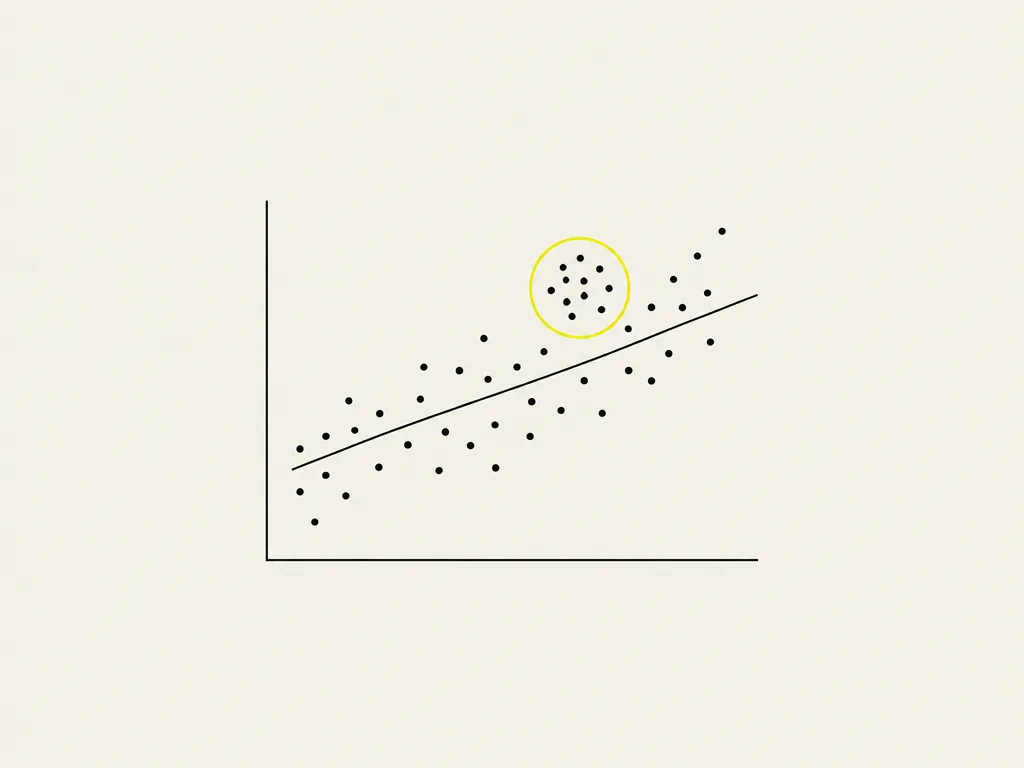
The report groups what goes wrong, with reproductions and a fix per pattern.
The eval set stays yours
Handed over wired as a CI gate, so every prompt or model change is scored the same way.
23Minds evaluates the quality of AI solutions that are already live: LLM features in a product, retrieval-based (RAG) answers, and agentic workflows that run without a person watching.
Show the full summary
The engagement builds an evaluation set from your real cases, agrees a scoring rubric with the people who own the business outcome, scores every case, and delivers a written report with a measured baseline, the failure patterns behind the score and a recommended fix per pattern. The unit of work is one evaluation - one test case scored against the rubric - so the scope and the invoice describe the same thing. The evaluation set and the rubric stay with you and get wired into CI as a quality gate that catches regression the next time a model, prompt or vendor changes. The service is tool-neutral: it runs on the evaluation stack you already have or helps you choose one, and at high volume it shows where self-hosting costs less than SaaS.
What makes this service defensible.
- Rubric agreed with the business owner
Correctness, grounding, task success, format, cost and latency, weighted by the person who owns the outcome.
- Roughly 150 real cases in the package
Built from your traffic and edge cases, in your tooling, owned by you afterwards.
- Judge model from a different family
The scorer is not the model being scored, so the score does not agree with itself.
- Fixed price per feature or agent
One LLM feature or one agent workflow, four weeks.
The process, phase by phase.



Pick the way in that fits your budget and timing.
Every practice has a free first step, an entry package with a written deliverable and its price listed here, and a full project or retainer quoted after a first call. Once the scope is agreed, the price is fixed, with no hidden costs.
- 1Step 1 · Free
Intro call or self-assessment
60 minutes · 1 engineer · no obligation
FreeTalk to an engineerShow details
- Intro call with an engineer, or the online self-assessment
- A written next step within one business day
- No obligation and no sales deck
- Recommended2Step 2 · Fixed price
LLM Evaluation: one solution
1 AI solution (LLM feature or agent) · up to 4 weeks from scoping
EUR 7,000 netFixed price, no hidden costs; extras only from the Not included list.
Ask for this packageShow details
- Scoring rubric agreed with you for one LLM feature or agent
- Evaluation set of roughly 150 test cases
- Baseline run against the current system
- The set wired as a gate in your CI
- Not included: Fixing the system, prompt and retrieval rework, building the AI feature, large-scale human labelling, the continuous evaluation retainer, tool licences.
- 3Step 3 · Project or retainer
Full scope, quoted after a first call
Full scope · phased delivery · quoted per phase
from EUR 14,000 net, quoted after a first callStart the conversationShow details
- Evaluation across several features or agents
- Continuous evaluation retainer
- Regression check after every model or prompt change
The situations that bring teams to this service.
- The LLM feature is live and the only quality signal is a complaint or a support ticket
- RAG answers read fluently, but nobody has verified they are grounded in the right source document
- Agentic workflows report success while a human quietly finishes the job, and nobody counts how often
Show the other problems (2)
- A prompt or model change ships and users discover the regression before the team does
- The team adopted a free evaluation tool and stalled on two things: building the test set and agreeing what 'good' means
- Product teams that shipped an LLM feature and have no way to tell whether the answers are actually good
- Companies running an internal AI assistant with flat adoption and no measure of whether it helps anyone
- Teams about to change model, prompt framework or vendor and afraid of a silent regression
- Operations and shared-service leads who put an AI step into a process and need to prove it shortened the process instead of moving the work
- Heads of engineering, data and support who started with a free evaluation tool, got traces flowing and stalled on the test set
Where this goes wrong, and what we do about it.
1. The judge agrees with itselfWhat stays with you: agreement rate between judge and human raters, the labelled sample, and the rubric that produced it
What happensA model from the same family scores the answers that another model produced, so shared blind spots cancel out and the score comes back reassuring. Practitioners call this a second failure mode rather than a verification layer, and it is the default setup in most evaluation stacks because it is the cheapest one to build.
What we do about itWe calibrate the judge against human labels on a sample before trusting a single automated score, and we report the agreement rate. Where agreement is poor we fix the rubric rather than the model, because a rubric people cannot apply consistently is not a measurement.
2. Everyone eyeballs the output and calls it evaluatedWhat stays with you: frozen evaluation set drawn from your traffic, with expected outcomes and the baseline scores
What happensA change ships because it looked better in a handful of prompts someone typed by hand. There is no held-out set, so the next change is judged against a different informal sample and nobody can say whether quality moved.
What we do about itWe build a case set from your real traffic, including the failures, and freeze it so successive versions are comparable. Every case carries the expected outcome and who decided it.
3. The workflow reports success while a person quietly finishes the jobWhat stays with you: end-to-end completion rate with interventions counted, broken down per step and per user journey
What happensAn agentic step marks itself complete, and a human silently corrects the result downstream. The dashboard shows a high completion rate because nobody counts the correction. The measured improvement is real to the tool and invisible to the business.
What we do about itWe measure at the point where the work is actually finished, not where the agent stops, and we count human interventions as failures of the step that needed them.
Deliverables, not deliverable-shaped slides.
- Evaluation set built from your real traffic and edge cases, in your tooling, owned by you after the engagement
- Scoring rubric with weighted dimensions (correctness, grounding, task success, format and tone, cost and latency) agreed with the business owner, not just with engineering
- Baseline scorecard: every case scored, results broken down per dimension, per user journey and per model or prompt version
- Failure-pattern report with reproductions, root cause and a recommended fix for each pattern
- CI quality gate: the evaluation set running as a blocking check on prompt, model, retrieval and vendor changes
- Process effectiveness read-out showing where the AI step shortens the process and where it moves work to a human, plus a tooling recommendation with a self-hosting versus SaaS cost comparison at your volume
Questions procurement teams ask.
Guides that lead to this service.
Talk to an engineer.
Describe where you are with LLM evaluation. A reply within one business day.